Choosing a decking material involves weighing upfront cost against long-term maintenance, expected lifespan, and how the material handles the specific climate demands of the region. In most parts of Canada, that means contending with significant freeze-thaw cycling, high humidity in spring and fall, summer UV exposure, and in some areas, heavy snow loads over winter.
Three materials dominate residential deck construction in Canada: pressure-treated (PT) lumber, western red cedar, and composite boards made from wood-fibre and plastic blends. Each handles these conditions differently, and the right choice depends on budget, intended use, and maintenance tolerance.

Pressure-Treated Lumber
Pressure-treated lumber is softwood — typically southern yellow pine or SPF (spruce-pine-fir) in Canada — that has been infused with preservative compounds under pressure. The treatment process forces preservatives into the wood cells, significantly slowing decay and insect damage.
Since 2004, most residential PT lumber in Canada uses ACQ (Alkaline Copper Quaternary) or CA (Copper Azole) formulations, replacing the older CCA (Chromated Copper Arsenate) that was phased out due to arsenic content. The newer compounds are less toxic but are more corrosive to metal fasteners, which means using hot-dipped galvanised or stainless steel hardware is not optional — it is required.
Performance in cold climates
Freshly treated PT lumber contains a high moisture content at time of purchase — often above 25%. Decking boards installed before adequate drying are prone to significant warping, cupping, and checking as the wood dries in place. Allowing boards to dry before installation, or purchasing kiln-dried-after-treatment (KDAT) material, reduces this risk.
Once dry and properly sealed, PT lumber handles freeze-thaw conditions reasonably well for the first several years. Without regular sealing (typically every 1–2 years), however, the wood absorbs moisture and becomes more susceptible to cracking and splitting during cold snaps.
Maintenance requirements
PT decking requires cleaning, sanding of rough surfaces, and application of a penetrating sealer or stain every one to two years to maintain structural integrity and appearance. Left unsealed, the wood greys and develops surface checks within a few seasons, though the structural timber itself remains sound longer than the surface appearance suggests.
Cost
PT lumber is the least expensive decking option in Canada by a significant margin. As of recent years, a standard 5/4 × 6 PT deck board runs considerably less per linear foot than cedar or composite alternatives, making it the default choice for budget-focused projects and for framing members where appearance is not a factor.

Western Red Cedar
Western red cedar (Thuja plicata) is a naturally rot-resistant softwood grown primarily in British Columbia and the Pacific Northwest. The wood contains thujaplicins — natural oils that inhibit fungal decay and insect damage without chemical treatment.
Cedar is lighter than pressure-treated SPF, making it easier to work with, and it holds fasteners without the hardware compatibility concerns of treated lumber. It machines cleanly and is generally free of the knots and defects common in lower grades of PT pine.
Performance in cold climates
Cedar's natural oils provide reasonable resistance to moisture absorption, which matters in freeze-thaw climates. It does not experience the same initial high-moisture shrinkage issues as freshly treated lumber. However, cedar is not impervious — in wet climates or in areas with persistent moisture contact, it will decay eventually, particularly at cut ends and in ground-contact conditions where the natural oils are most vulnerable.
Cedar is well-suited to Ontario, Quebec, and the Maritimes where decks experience hot summers, cold winters, and moderate precipitation. On the West Coast, where rainfall is higher, higher grades and regular maintenance are more critical.
Maintenance requirements
Cedar benefits from a UV-blocking stain or oil applied shortly after installation and reapplied every two to three years. Without protection, cedar weathers to a silver-grey — a finish some homeowners accept and others find less appealing. The silver-grey weathered surface does not indicate structural failure.
Cost
Cedar falls between PT lumber and composite in cost. Pricing varies by grade — clear vertical grain cedar commands a premium, while knotty grades are more accessible. It is generally more expensive than PT decking but less than most composite options.
Composite Decking
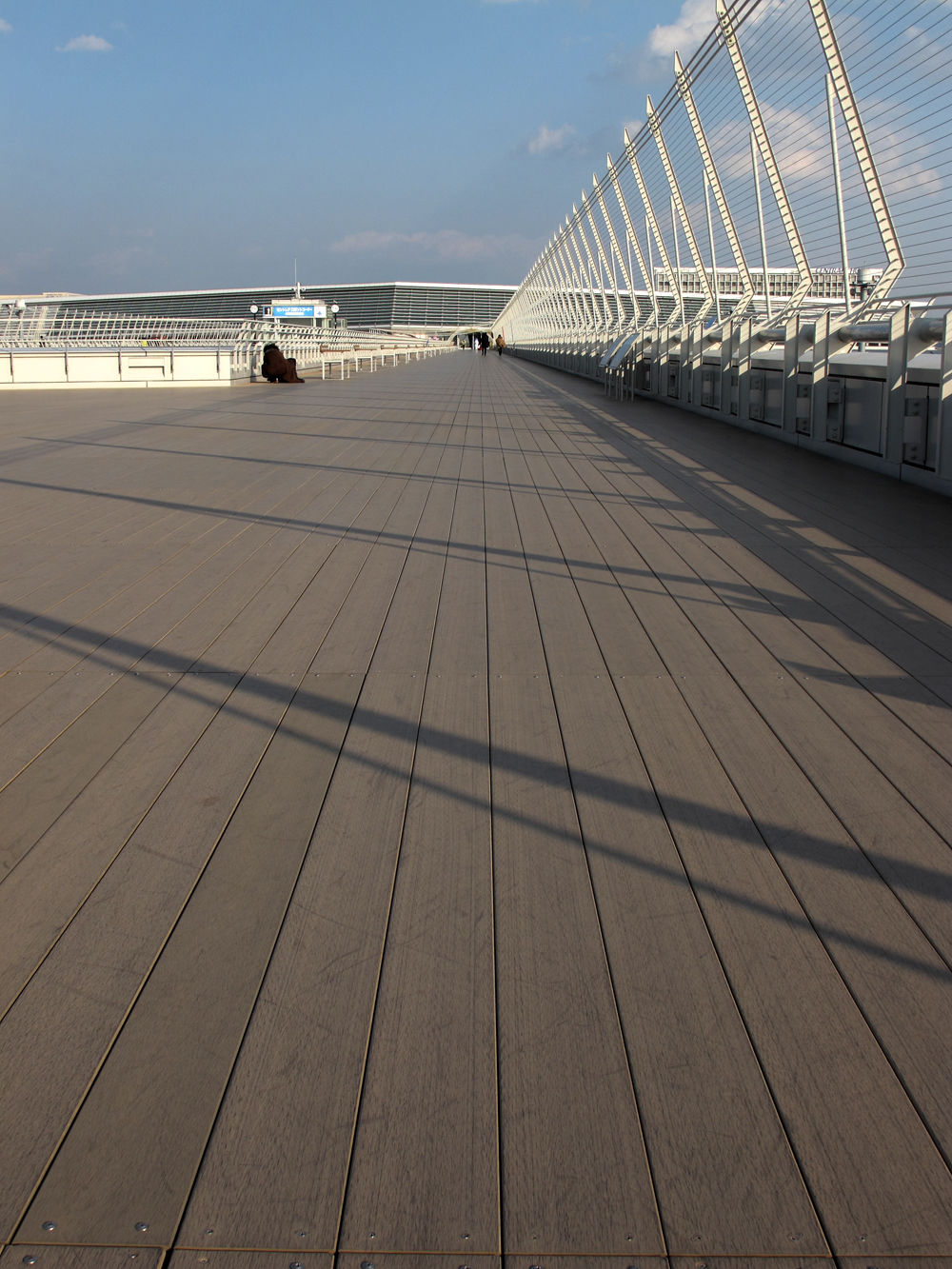
Composite decking is manufactured from a blend of wood fibre (typically recycled sawdust or wood chips) and polyethylene or PVC binders, often with a protective outer cap layer. Brands like Trex, TimberTech, and Fiberon — all of which have distribution across Canada — are among the commonly cited manufacturers.
The cap layer on most current composite products is a co-extruded shell that protects the wood fibre core from moisture absorption, staining, and fading. Earlier (pre-2010) uncapped composite boards are considerably more prone to moisture issues than current generation products.
Performance in cold climates
Composite boards expand and contract more than wood in response to temperature changes. In Canada's climate, where temperatures can swing from –30°C in winter to +35°C in summer, this thermal movement is pronounced. Most manufacturers specify gap requirements between boards that account for this movement, and failure to allow adequate gaps can result in buckling.
Capped composite resists moisture penetration well, which means freeze-thaw cycling has less effect on the boards themselves than on untreated wood. However, the frame and substructure beneath a composite deck is typically still built from pressure-treated lumber, so substructure maintenance remains relevant.
Maintenance requirements
Composite decking requires no sealing, staining, or painting. Routine cleaning with soap and water — and periodic use of a composite-specific cleaner to address mold or mildew on the surface — is the primary maintenance task. This is a significant selling point for homeowners who want to reduce ongoing upkeep.
Cost
Composite is the most expensive option for deck boards, often two to four times the per-board cost of PT lumber. Manufacturers typically offer long warranties (25 years or more for capped composite), which proponents use to offset the higher upfront cost when calculated over the deck's lifespan.
Comparison Summary
| Factor | Pressure-Treated | Cedar | Composite |
|---|---|---|---|
| Upfront cost | Lowest | Mid-range | Highest |
| Maintenance frequency | Every 1–2 years | Every 2–3 years | Minimal (cleaning only) |
| Expected lifespan (with care) | 15–25 years | 20–30 years | 25–40 years |
| Freeze-thaw resistance | Moderate (sealed) | Good | Good (capped) |
| Appearance over time | Greys; checks visible | Greys naturally | Consistent |
| Hardware compatibility | Galvanised/SS required | Standard SS preferred | Hidden fasteners typical |
| Substructure use | Standard | Possible (ground contact grades) | PT lumber substructure |
Applicable Canadian Standards
Deck construction in Canada is governed by the National Building Code of Canada (NBC), which sets minimum requirements for structural members, loads, and connections. Provincial building codes — such as Ontario's Building Code and the BC Building Code — adopt the NBC with local amendments. Fastener and connector specifications for PT lumber follow Canadian Wood Council guidance and manufacturer requirements for treated wood compatibility.
Note on local permits: Decks exceeding a certain height or size typically require a building permit in most Canadian municipalities. Requirements vary by jurisdiction — checking with the local building department before starting construction is the appropriate first step.